Shopify is the world's most popular e-commerce platform. It is also priced for American businesses. If you are a Kenyan seller trying to figure out whether Shopify makes sense for you, this is the honest breakdown, including the costs most reviews do not mention.
Shopify's Pricing in KES (2026)
Shopify's plans are priced in USD. At current exchange rates, here is what each plan actually costs a Kenyan business every month:
- Basic - $29/month approximately KES 3,770 per month
- Shopify - $79/month approximately KES 10,270 per month
- Advanced - $299/month approximately KES 38,870 per month
These are the subscription fees only. Before you have listed a single product or made a single sale, you are committing to at least KES 4,300 every month, billed in USD, requiring a foreign currency card or a Kenyan card that supports international transactions.
The Hidden Costs Shopify Does Not Advertise
The subscription fee is only the beginning. Here is what a Kenyan Shopify store actually costs to run:
Transaction fees Shopify charges 2% on every sale if you do not use Shopify Payments. Shopify Payments is not available in Kenya. This means every sale you make attracts an additional 2% fee on top of your payment processor's own fees.
Payment processing Shopify does not natively support M-Pesa. To accept M-Pesa on Shopify, you need a third-party integration, which typically costs an additional monthly fee or per-transaction charge on top of everything else.
Themes The free Shopify themes are functional but limited. Premium themes cost between $150 and $350 as a one-time purchase. Most serious Shopify stores use a paid theme.
Apps Almost every feature beyond basic product listings requires a paid app. Email marketing, upsells, reviews, loyalty programs, and advanced analytics all come from the Shopify App Store, most with monthly fees ranging from $10 to $50 per app.
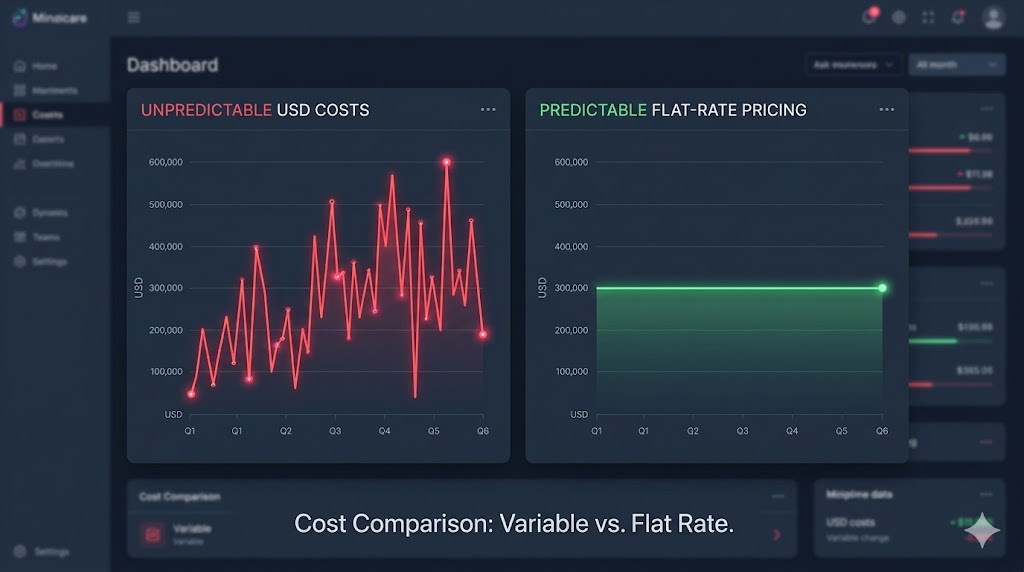
A realistic monthly cost for a Kenyan business running a functional Shopify store: KES 8,000 to KES 15,000 per month, before making a single sale.
The M-Pesa Problem
This is the fundamental issue with Shopify for Kenyan sellers. In Kenya, M-Pesa is not an optional payment method — it is the default. A significant portion of your potential customers do not have cards. They pay with M-Pesa for everything.
Shopify was built for card payments in Western markets. Adding M-Pesa requires workarounds, third-party apps, and additional integration costs. It works, but it is not native. The checkout experience is not as smooth as a platform built with M-Pesa from the ground up.
For a customer to pay via M-Pesa on a standard Shopify store, the process involves more steps than it should. In a market where friction kills conversions, every extra step costs you sales.
When Shopify Does Make Sense for a Kenyan Business
Shopify is not the wrong choice for every Kenyan business. It makes sense when:
- You are selling internationally and need a globally trusted checkout with card support
- You have significant volume and need advanced inventory management across multiple locations
- You are dropshipping products and need deep integration with international suppliers
- Your monthly revenue comfortably exceeds KES 50,000 and the platform cost is a small percentage of revenue
For most Kenyan small businesses and solo sellers just starting out, none of these apply yet. Shopify's power becomes relevant at a scale most sellers have not reached when they are making the platform decision.
What Kenyan Sellers Use Instead
The alternative that makes sense for most Kenyan sellers starting out is a platform built specifically for the Kenyan market. One where M-Pesa is the primary checkout, pricing is in KES, and you are not paying for infrastructure built for a different market.
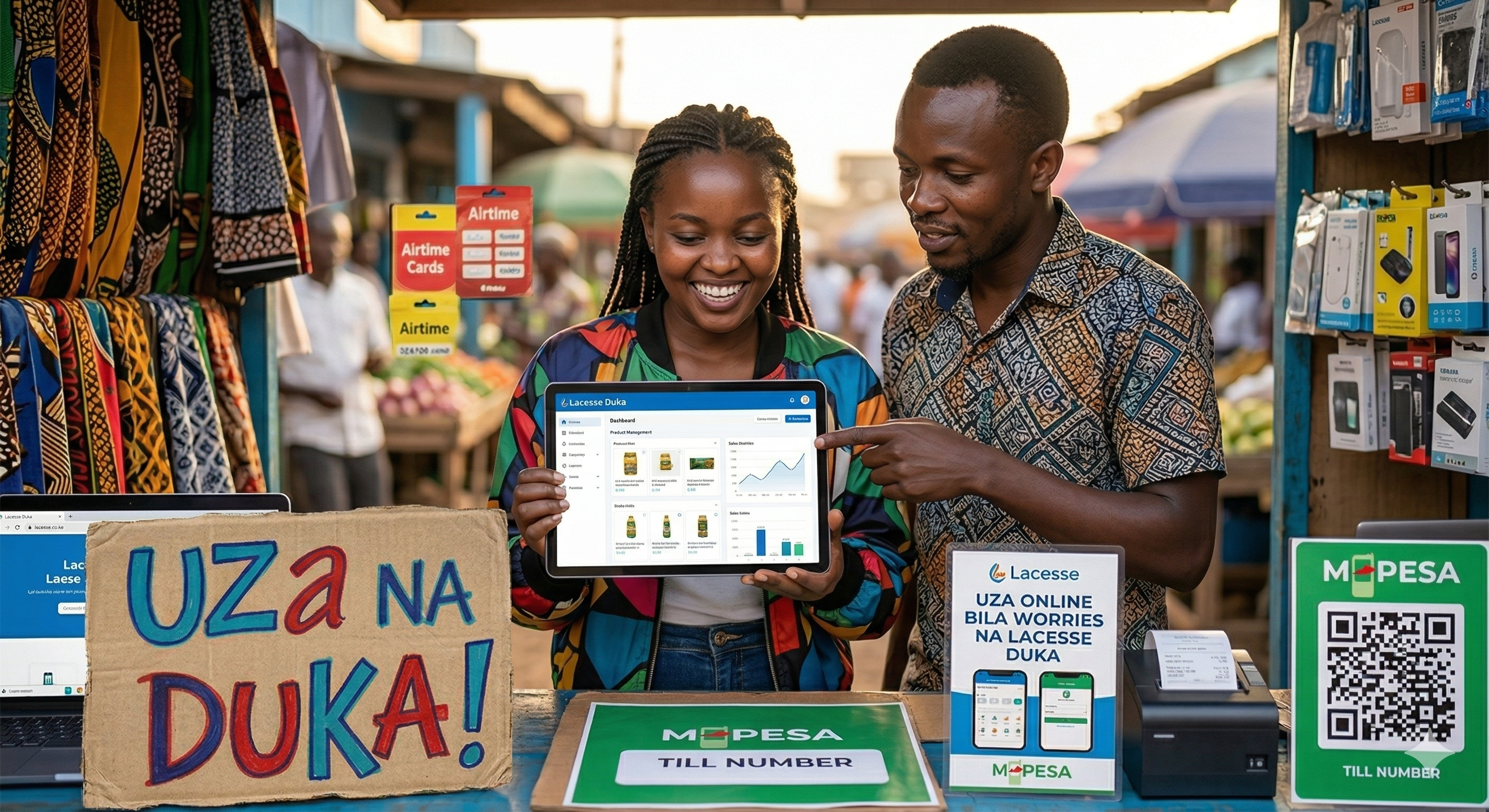
Lacesse Duka costs KES 499 per month. That is roughly 9x cheaper than Shopify's Basic plan. M-Pesa checkout works natively through Paystack : no third-party apps, no workarounds. Digital products are delivered automatically after payment. Physical product listings, a mobile-first storefront, and AI tools for marketing are included.
The math for a seller just starting out is straightforward: KES 499 per month versus KES 3,770 per month, with better M-Pesa integration at the lower price point. The savings in the first year alone - over KES 35,000 - is capital that stays in your business.
The Real Question
The right question is not "is Shopify good?" It clearly is, for the market it was built for. The right question is "is Shopify the right tool for a Kenyan seller at my current stage?"
For most people reading this, the answer is not yet. Start with infrastructure built for Kenya, make your first sales, understand your customers, and scale. When your volume justifies Shopify's cost and complexity, that option is always available to you.
For now, the fastest path to your first M-Pesa sale is a platform that was built for exactly that.
Open your Lacesse Duka for KES 499 and start selling today.