Selling online in Kenya has never been more accessible, but most people who try it never make their first sale from a stranger. This guide covers exactly what works in 2026, specific to the Kenyan market, with M-Pesa as the payment backbone.
Why Most Kenyan Online Sellers Fail Before They Start
The most common mistake is spending months perfecting a product or a website before making a single sale. You do not need a perfect setup to sell online. You need one product, one price, and one way for someone to pay you. Everything else comes after the first sale.
The second mistake is treating WhatsApp as a store. WhatsApp is a conversation tool. It is not a checkout. Every sale that happens over WhatsApp DMs requires manual effort from you : quoting prices, confirming orders, chasing payments, sending receipts. That model does not scale, and it loses customers at every step.
What You Can Sell Online in Kenya
Almost anything, but some categories convert better than others in the Kenyan market:
Physical products : Fashion, electronics accessories, beauty products, food, and household items all sell well. The key constraint is delivery. If you can deliver within Nairobi in 24 hours and countrywide within 3 days, you can compete.
Digital products : eBooks, templates, design assets, courses, and study materials have zero delivery cost and zero inventory risk. A digital product made once can sell indefinitely. This is the highest margin category for a solo seller.
Services : Graphic design, copywriting, video editing, tutoring, consulting. You are selling your time and skill. The online store becomes your booking and payment page rather than a product catalog.
Food and beverages : Homemade products, baked goods, specialty foods. High repeat purchase rate when the product is good. Delivery radius is the main constraint.
The M-Pesa Checkout Problem
Every online business in Kenya eventually hits the same wall: how do customers pay?
The manual route, sharing a till number or personal M-Pesa number and waiting for a screenshot works for the first few sales. It breaks at scale. You cannot confirm 20 orders a day manually. You lose customers who pay and then wait hours for confirmation. You have no automated record of who paid for what.
The professional route is an integrated M-Pesa checkout through a payment processor like Paystack. The customer taps a button, enters their phone number, an STK push hits their phone, they enter their PIN, and the payment is confirmed automatically within seconds. No manual work from you. No waiting. No lost screenshots.
This is the infrastructure difference between a side hustle and a business.
Where to Sell: Choosing Your Platform
You have three options, each with real tradeoffs:
Social media only (Instagram, TikTok, Facebook) Free to start, but you own nothing. The algorithm controls your reach. No checkout means every sale requires manual work. Good for building an audience, not for running a business.
International platforms (Gumroad, Shopify, Stan Store) Built for Western markets. Gumroad takes 10% of every sale. Shopify starts at $29/month and requires a foreign card. Payouts go to PayPal or Stripe, both of which have friction for Kenyan accounts. These platforms were not designed for M-Pesa.
Kenyan-built platforms Built for local payment infrastructure from the ground up. M-Pesa checkout works natively. Pricing is in KES. No currency conversion, no payout delays, no fighting with PayPal to release your money.
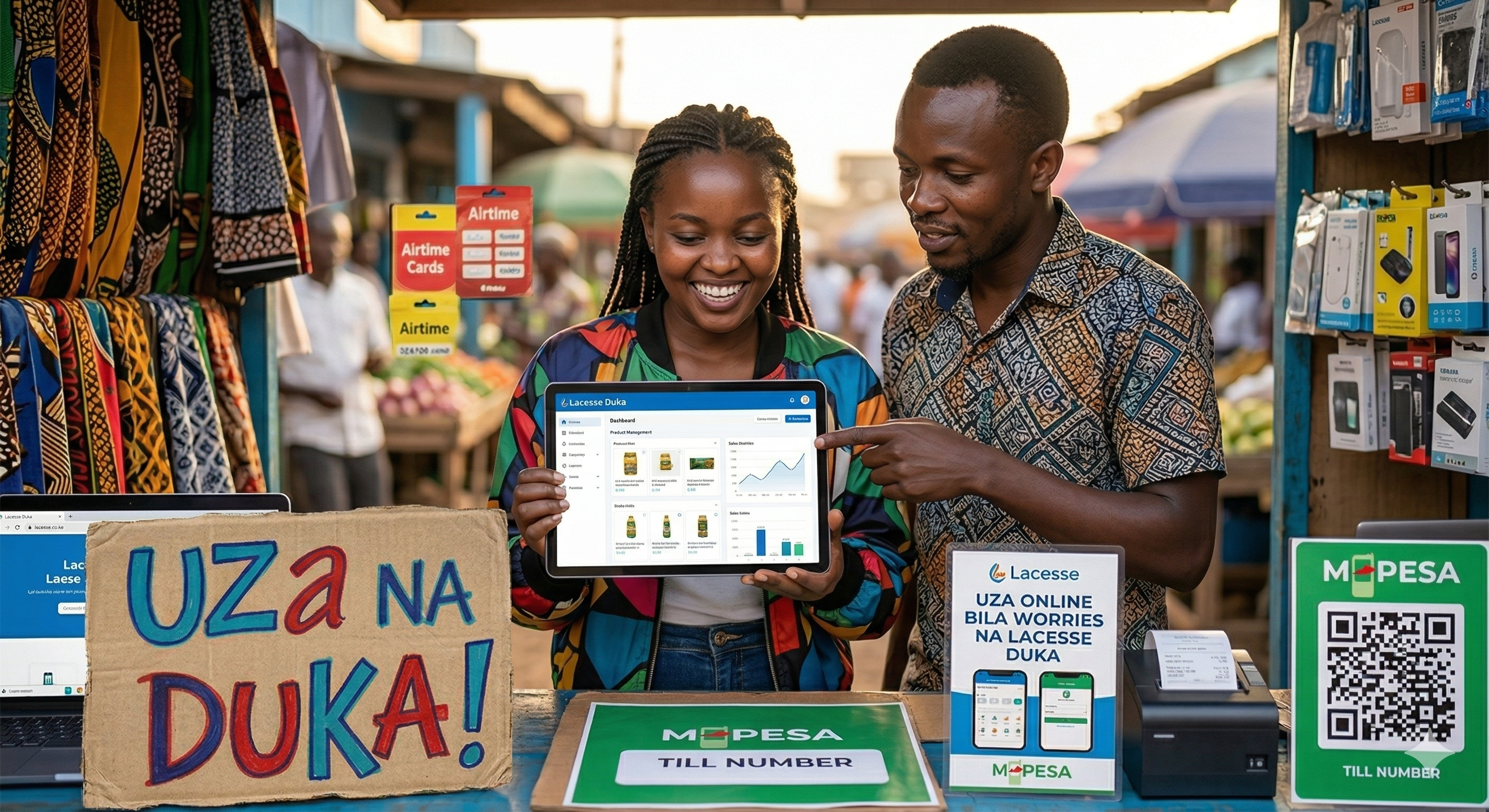
Lacesse Duka sits in the third category. It is built specifically for Kenyan sellers. Physical products, digital downloads, and services with Paystack-powered M-Pesa checkout, automatic digital delivery, and a mobile-first storefront your customers can use on any phone.
The System That Actually Works
Strip away everything complicated and the working model for selling online in Kenya is this:
- One store link a URL that shows your products and accepts payment
- One traffic source Instagram, TikTok, WhatsApp status, or Google search
- One checkout method M-Pesa, integrated, automatic
Post content that drives people to your store link. They land, browse, pay via M-Pesa. You get notified. You fulfill. That is the entire system.
Most sellers complicate this by adding steps, DMs, manual confirmations, bank transfers, cash on delivery. Every added step costs you customers. The goal is to reduce the distance between "I want this" and "I have paid" to as few seconds as possible.
Getting Your First Sale From a Stranger
A sale from a friend or family member does not count as proof your business works. A sale from a complete stranger, someone who found you through search or social media, trusted your store enough to pay, and completed the transaction without you being involved, that is the milestone that changes everything.
To get there, you need three things to be true at the same time:
- Someone needs to be able to find you through Google, Instagram, TikTok, or a shared link
- Your store needs to look trustworthy enough for a stranger to pay
- The payment needs to work on the first attempt without friction
Most sellers are missing at least one of these. The store is not findable, or it looks unfinished, or the payment process is manual. Fix all three and the first stranger sale becomes a matter of when, not if.
What Happens After the First Sale
The first sale from a stranger is not the end, it is the beginning of a completely different set of questions. Why did they buy? How did they find you? What made them trust you enough to pay? Answering those questions tells you exactly how to get the second sale, and the tenth, and the hundredth.
The sellers who scale in Kenya are not the ones with the most followers or the best products. They are the ones who understood why their first stranger bought, and then repeated that systematically.
Set up your Lacesse Duka, put your link where people can find it, and go get your first stranger sale.